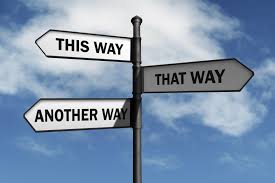
 By mid-week it was becoming clear that the repeal/replace bill was going down. Mark Meadows and his Freedom Caucus were digging in their heels, and it had been on their square that Ryan and Trump had placed all their political chips. So, I began to contemplate what would happen in Washington in the wake of the debacle called AHCA, the plan not called Trumpcare. Last night we heard some pretty clear signals.
It could have gone one of three ways, each closely tied to the selection of the next priority for the administration.
- Healthcare- The President and the Speaker could decide to retrench and take another run at this thing with a new strategy to win more votes.
- Infrastructure- Trump could have brought to the top of the list his only campaign promise that Democrats might get behind.
- Tax Reform- He could bank on one of the most appealing long term rallying cries of the Republican party.
If the choice had been healthcare, it is unlikely they would look to the Democrats for votes, so the move would have had to have been to supplicate to the Freedom Caucus. That would have signaled a shift to the right in the Republican power center and, in the longer term, a complete turnover in the congressional leadership of the party.
The infrastructure plan would have led down the opposite political path. Trump would have retreated to the populist high ground from which he campaigned, angling to piss off both parties equally, and might have been able to come up with a plan that some Dems could get behind because it struck a comfortable chord: Federal spending to create jobs. Moderate republicans might have held their nose on the first half of that in order to get the second…jobs jobs jobs. The Freedom Caucus would have gone crazy and maybe flamed out. And the country would have ended up with some better maintained bridges and tunnels. (Although, a trillion dollars, while it sounds like a lot, would have been spread pretty thin.)
But, in a short speech, the tone of which uncharacteristically measured, the President made the path forward clear. (And, as of 9am EDT, not a single tweet from readDonaldTrump, let alone any to indicate an about face.) What did he tell us?:
- It was the Democrats fault.
- Paul Ryan is a great guy.
- “We’re going to go for tax reform, which I’ve always liked.”
There were some mixed signals. He espoused bipartisanship, but in the end, I can’t imagine how taxes can be any less divisive than healthcare. It looks like the President is going all in with his party and banking on Ryan to this time pull off pulling the gang together. In “what the hell do I know?” category, I thought he’d throw Paul Ryan under the bus, distance himself from the Republican rightright, and focus on some getting some bipartisan wins including a major infrastructure bill.
But no, he picked the one issue that might be more complex than healthcare. Future quote prediction: “Who knew how complex tax reform could be?” You heard it here first folks.
My crystal ball runs low trying to predict how this will play out. One prediction: Zero Democratic votes, whatever the details of the bill. A strategy to unify Republicans has to be based on the classic notion of cutting taxes and depending on trickle down to increase the wealth of lower income Americans. No Democrat will buy that. And, with even the most optimistic assumptions about the economic lift, how do you get anywhere near a balanced budget? With even deeper spending cuts than those floated recently? That would further drive a wedge between the parties and would be likely to alienate the lower income Republican faithful who depend on many of the services likely to be cut. This future bill could equal the healthcare bill’s 17% popularity.
The other approach might be to focus on simplicity—there’s a lot of appeal to a flat business tax—and by removing deductions offset loss of income for the budget. But this will create multiple factions of winners and losers and will likely more splinter than rally the party. And then there’s border taxes, also more likely to divide than unite.
I’ve got to study this one a little more, gang, but, boy, I don’t see how tax reform can go any smoother than healthcare. The high wire act continues.
 The institution of a free press is at risk and democracy depends on it. (That’s why it’s protected in the First Amendment.)
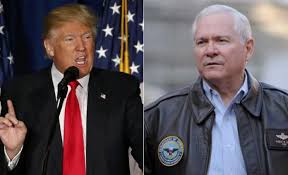 Just over a week ago, Robert Gates spoke at a Greater Boston Chamber of Commerce event. Of course, the first days of the Trump presidency were high on the list of questions he received, and he responded with unique perspective.
 In her
 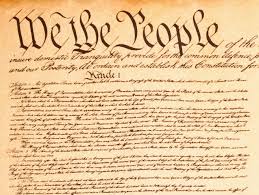 constitutional scholar (and I’d love my attorney friends to weigh in with some case law) but I really don’t believe the framers intended the Constitution to ban routine business transactions.
 agencies to stonewall the ACA and yesterday’s ludicrous speech at the CIA have more or less torpedoed any hopes I have that he might, in some ways, do a good job.
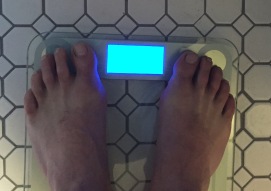 Weight is so central—both an indicator and a driver of health—that it’s well-worth shining a light on. Face the reality of the scale every day. Doing so creates the little voice in the back of your head that quietly reminds you when faced with the dessert menu that tomorrow morning you will also have to face the numbers. It’s good to have some goal in mind. An excellent internist advised me years ago to pick a number that triggers red flashing lights and sirens. In my case, a nice, round 200 works very well. If I find myself approaching that threshold (which, by the way, I had blown past by my late thirties): Whoop, whoop…flash, flash, it’s a sobering condition red.
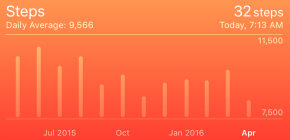 I never jumped on the FitBit, but as soon as my iPhone started counting steps, I began mildly obsessing over getting in 10,000 steps every day. This has clearly modified my behavior. I have cranked up the mileage on my runs, walk to someone’s desk at work rather than texting, and just yesterday, took the dog for another walk in the late afternoon, because I was sitting about 7,500 steps. As with anything, one can go overboard. And the reality is, I fall short, sometimes way short, a day or two a week, but being mildly obsessed with one’s health is a positive.
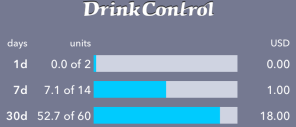 Most experts agree that for a male two drinks a day on average and never going above four are good guidelines. Knowing that I occasionally deviate, I started measuring using a simple iPhone app. It requires me to log in every drink which is a little bit of hassle, but manageable for the mildly obsessed. I’m positive that the act of measuring has caused me to drink less over the last couple of months. Having misbehaved a bit last weekend and to create some buffer for this weekend, I turned teetotaler for Sunday – Wednesday to get my 14-day average down.
 the second, “Easter is my favorite holiday too, but-a you got it all wrong.” He went on. “I love Easter because it’s when the fat man dresses up in his red suit and brings gifts to all the little children. He go down the chimney and it make ’em so happy. So that’s why I love-a Easter.”
 But, I still love to write. The last 18 months I’ve been working on a book abut a twenty-five year annual fishing trip. I actually mention my barefoot running in the book in a chapter where I explain about another sartorial oddity of mine–fishing without waders. (I do wear pants, though.) I mention it here in case any old BFP fans have interest in stories of friendship and the woods and fishing. Many test readers have given it a big thumbs up. Please check out the website at:

 Barefoot Phil